The Loire, the Vendee, and the Long Road to Lisbon - A Cyclist’s Pilgrimage
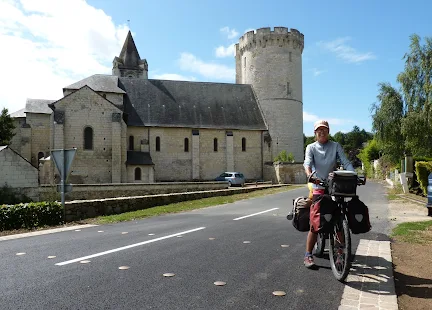
43-45 EUROPE - PART 2
5
July – 27 August 2011
3,438 Kilometres - 52 Days
The Loire, the Vendee, and the Long Road to Lisbon - A Cyclist’s Pilgrimage

43-45 EUROPE - PART 2
5
July – 27 August 2011
3,438 Kilometres - 52 Days

FLIP-BOOK
VOICEOVER
Europe
— Part Two
Prologue
There are
journeys that begin with a map, and others that begin with a feeling. Leaving
Budapest, I wasn’t chasing a destination so much as a direction — westward,
toward the Atlantic, toward a horizon I couldn’t yet name. The train rattled
through the night, and by the time I stepped onto the platform in Basel, I felt
suspended between worlds: the one I had just lived, and the one waiting to unfold
beneath my wheels.
The Train to
Basel
My last
morning in Budapest began with clean laundry and a final wander through
Budapest’s markets, the city humming with its usual confident energy. PC walked
beside me, newly reunited with his passport, and together we threaded through
the familiar streets one last time. Back in my room, I performed the ritual I
knew so well: folding, sorting, tucking memories into panniers as if they were
talismans.
The train to
Basel was a patchwork of improvisation — it took jumping on and off to
manoeuvre my bike from one train car to another like a circus performer, and
trying to sleep upright while the train clattered through the dark. It wasn’t
restful, but it was movement, and movement was enough. Somewhere between Hungary
and Switzerland, I felt the quiet certainty that the road ahead — whatever
shape it took — would change me again.
FRANCE
1,901 Km – 23 Days
Into France on
the Quiet Canal Road
Basel greeted
me with a kind of cheerful confusion. Three countries meet here, and stepping
out of the station felt like walking into a cultural crossroads with no
signposts. I wasn’t entirely sure which nation I was standing in, but the
city’s charm was unmistakable — cobbled lanes, elegant facades, and a sense of
order that made me want to linger.
But the canal
was calling.
I slipped onto
the path along the Rhine Canal, where forests leaned toward the water and ducks
paddled with enviable calm. The route was so well marked it felt like being
gently guided by an invisible hand. I reached Mulhouse earlier than expected,
wandered its streets, and stocked up on bread and cheese — the cyclist’s holy
sacrament.
The campsite
was a small delight: Wi‑Fi, hot showers, and a pizza stand that felt like a
gift from the pizza gods. After the sleepless train night, I crawled into my
tent long before the sun finally surrendered at 9:30 p.m., grateful for
stillness.
Stormlight,
Barges, and the Lure of Pizza
Morning in
Mulhouse arrived with soft light and the last of my bread and cheese. I packed
quickly, eager to return to the bike path that felt like a secret whispered
only to cyclists. Unlike the Danube’s busy caravan of riders, this canal route
was quiet, intimate, almost meditative.
Barges drifted
by like slow-moving dreams. Lockmasters’ cottages appeared at intervals, each
one framed by gardens so charming they looked painted into place. But the locks
themselves were less poetic — boats queued, engines idling.
By afternoon, the
sky darkened. Thunder rolled across the valley, urging me to hurry. I pitched
my tent near L’Isle-sur-le-Doubs just as the first heavy drops fell,
then sat inside listening to the storm drum on the flysheet. Dinner was my
bread and cheese — until the rain eased and the scent of pizza lured me out. I
dashed through puddles, bought a steaming pizza, devoured half, and saved the
rest for breakfast. A small triumph in a day shaped by weather and water.
Mist, Thunder,
and the Long Green Corridor
The morning
mist felt like stepping into a dream. I lingered over coffee and cold pizza
while waiting for my tent to dry, then set off along the canal once more. The
settlements I passed were eerily still — shutters closed, no movement, as if
the entire region had pressed pause.
Besançon rose
ahead of me like a revelation. Its citadel — eleven hectares of stone and
history — perched above the town with quiet authority. A tunnel beneath the
fortress carried me through the mountain, and emerging on the other side felt like
stepping into another century.
A sign told me
Nantes was only 730 kilometres away. Somehow, that number made the Atlantic
feel close enough to touch.
I found a
small campsite in Ranchot, nothing fancy but fragrant with freshly cut grass.
Dinner required a ride to the nearest village for bread — a small price for the
pleasure of eating beside the river as evening settled around me.
Rain,
Pasteur’s Town, and a Five-Euro Haven
Morning in
Ranchot arrived soft and quiet, the kind of stillness that makes you wonder if
you overslept the world. Most of the other campers had already vanished, their
tents flattened, their cars long gone. I lingered, unhurried, letting the day
unfold at its own pace.
The ride to
Dole was a gentle warm-up, twenty-five kilometres of easy pedalling along the
canal. Louis Pasteur’s birthplace revealed itself in a cluster of medieval
streets and the proud silhouette of the Collegiale‑Notre‑Dame. I wandered
briefly, absorbing the hush of old stone and the faint scent of river water,
then slipped back onto the path.
Rain arrived
like an uninvited guest — not dramatic, just persistent, a steady drizzle that
blurred the edges of the day. By the time I reached Verdun-sur-le-Doubs, I was
damp, hungry, and ready for shelter. The campsite was a small miracle: five
euros, a friendly woman at reception who spoke English, and Wi‑Fi that felt
like a luxury.
I rode into
town for supplies — bread, cheese, chips, beer, coffee — the essentials of a
cyclist’s pantry. Verdun revealed itself in narrow alleys, stone bridges, and
the quiet dignity of a place that has endured centuries of conflict and emerged
from them all. Back at camp, I ate under a grey sky, grateful for warmth, food,
and the simple comfort of being still.
Thunder,
Laundry, and the Slow Art of Stillness in Verdun-sur-le-Doubs
Thunder woke
me before dawn, the sky cracking open in bright flashes. It was clear I wasn’t
going anywhere. Rest days have a way of choosing themselves.
With the storm
rumbling overhead, I surrendered to practicality: laundry, repairs, reorganising
the panniers that had slowly devolved into chaos. Verdun‑sur‑le‑Doubs, once a
medieval border town, felt like the right place to pause — a place shaped by
battles long past, now softened by time and river light.
I cycled into
town between showers, practising my tentative French. “Bonjour,” “Merci,” “Au
revoir.” Judging by the amused expressions I received, my pronunciation hovered
somewhere between earnest and alarming. Still, the ritual of buying a baguette
and camembert made me feel momentarily local.
By afternoon,
the rain eased. I sat by the river watching houseboats drift past, and
fishermen stared intently at the water that refused to yield a single fish. My
panniers were heavier with supplies, but my spirit felt lighter. Sometimes a
day of stillness is its own kind of progress.
Sun,
Vineyards, and a South African Flag on the Water
Sun returned
with a vengeance — bright, warm, and full of promise. I set off from Verdun‑sur‑le‑Doubs
for Paray‑le‑Monial, about 130 kilometres down the path, early, skipping my
usual coffee stop, letting the canal guide me through a landscape that shifted
subtly from forests to vineyards.
The hills
rolled gently, and I chose the country lanes over the official cycle path,
craving the quiet rhythm of rural France. At one point, a grassy jeep track
tempted me with a sign marked “rough.” It turned out to be more playful than
punishing, a soft detour through fields humming with summer.
Houseboats
dotted the canal, and then — a flash of home. A South African flag fluttered
from one of the decks. I braked instinctively, calling out a greeting. The
couple aboard looked as surprised as I felt. We exchanged a few warm words
before the lock carried them onward, leaving me smiling at the unexpected
connection.
By the time I
reached Paray‑le‑Monial, hunger had hollowed me out. A mobile pizza stand
waited at the campsite entrance like a beacon. I devoured a pizza that may have
been ordinary or extraordinary — hunger is the best seasoning — and sat outside
my tent as the sky held its light until nearly 10 p.m.
Following the
Loire Into a City of Quiet Grace - Nevers (115 km)
The day began
golden, the sun low and generous. I followed the Loire, choosing the farm roads
that hugged the river rather than the official route. Medieval towns appeared
like mirages — beautiful, silent, almost deserted, as if the inhabitants had
stepped out for a century or two.
Decize tempted
me with its peaceful campground, but I resisted, stopping only for coffee
before pushing on. Nevers rewarded the effort. The campground sat perfectly
along the riverbank, offering a postcard view of the old town and its cathedral
rising above the water.
I wandered
into town, weaving through narrow streets until a Carrefour appeared like a
modern oasis. I stocked up on a ready-made salad, fresh baguettes, and more
coffee — always more coffee. Nevers felt like a place suspended between eras,
its ancient houses leaning gently toward the present. I slept with the sound of
the river just beyond my tent.
Grey Skies,
Cold Rain, and Small Mercies
Grey skies
greeted me, heavy and cold, the kind of morning that makes you want to burrow
deeper into your sleeping bag. I finally forced myself onto the bike around 10
a.m., pedalling into a drizzle that felt more like November than July.
An hour later,
salvation appeared in the form of a small pub. I ducked inside for coffee,
warming my hands around the cup while watching the rain streak the windows. The
rest of the day was a quiet battle — against wind, against dampness, against
the creeping fatigue that comes from too many grey days in a row.
Cosne offered
practical comforts: cash from an ATM, a SIM card for my modem, and a campsite
where the rain finally relented. I ate my bread and cheese outside, grateful
for the simple pleasure of dry air.
Bastille Day
Winds and Fireworks
Bastille Day
began with a headwind that felt personal. Gravel sections slowed me further,
and I found refuge in a solitary pub for coffee before continuing on. Lunch at
the castle in Sully was a brief, sunlit pause before the wind resumed its
relentless push.
By the time I
reached Orléans, the sky was streaked with the colours of evening. I treated
myself to French fries and a beer, then settled into the campsite as the city
prepared for its celebrations. Fireworks erupted around 11 p.m., shaking the
ground with each explosion. I drifted to sleep imagining the sky lit with
colour, each burst a reminder that summer had officially begun.
Golden Light,
Flaky Pastry, and a Needed Early Stop
Sun returned,
bright and warm, reflecting off the Loire like scattered gold. I skipped
breakfast — a consequence of too much chatting the night before — and didn’t
roll out of Orleans until after 10. Twenty kilometres later, a pastry shop
appeared like a blessing. I devoured something flaky and sweet, feeling
instantly revived.
The villages
along the Loire felt timeless, their medieval facades softened by centuries of
weather and river light. I stocked up on supplies and stopped early at a
conveniently placed campground near Chaumont-sur-Loire. The wind had worn me
down over the past days, and rest felt like the wiser choice.
That night,
fireworks continued across the river — Bastille Day’s echo — accompanied by
distant music. I lay in my tent listening to the celebration drift across the
water.
Rain, Cave
Homes, and the Sting of Nettles - Chaumont-sur-Loire to Montsoreau (110 km)
Rain returned
with a vengeance. I packed in a frenzy, stuffing wet gear into bags as the
drizzle thickened into a cold, needling wind. The day was a long, shivering
push through weather that felt determined to test me.
Amboise
appeared briefly, its cave‑homes tucked into cliffs like something out of
another world. Tours offered a warm cup of coffee, a brief reprieve before the
storm resumed. At one point, desperate for a restroom, I ducked into a wooded
area — only to sit directly on stinging nettles. The shock was instant and
fiery. I yelped, leapt up, and pedalled the last fifteen kilometres with a
speed born of indignation.
Reaching the
campsite felt like crossing a finish line. I peeled off my wet layers and
collapsed.
A Day of Wind,
Grit, and Gritted Teeth—Montsoreau to La Possonnière (78 km)
Morning
arrived reluctantly, wrapped in cold wind and low clouds that made the world
feel muted. Crawling out of my sleeping bag took resolve I wasn’t sure I had.
The Loire Valley unfolded in rolling hills and vineyards, castles perched like
watchful sentinels above the river. Under different skies, it might have felt
romantic. Today, it felt like a test.
By midday, the
wind had turned feral. Gusts slammed into me sideways, forcing me to grip the
handlebars with both hands as rain stung my face. Each kilometre felt earned
through sheer stubbornness. I pulled my cap low, narrowed my focus to the few
metres ahead, and pushed on.
Reaching La
Possonnière felt like stumbling into a sanctuary. The campsite was basic, but
it offered what I needed most: a place to peel off my soaked layers and
breathe. I crawled into my tent, listening to the wind batter the flysheet,
grateful simply to be horizontal and dry.
Castles in the
Mist and a Hard-Won City
I woke feeling
unexpectedly refreshed, as if the storm had wrung something out of me. The sky
remained dull, but my spirits had lifted. Thirty kilometres in, hunger demanded
attention, and I stopped at a café for a croissant and coffee — a small ritual
that restored both warmth and optimism.
Then, as if on
cue, the landscape shifted. Castles and forts rose from the horizon, their
silhouettes dramatic against the grey sky. The Loire Valley, even under cloud,
had a way of surprising me into awe.
Nantes, the
last major city before leaving the Veloroute 6, proved elusive. The map
promised two campsites; reality offered none. After circling the outskirts in
growing frustration, I surrendered and booked a hotel — a rare indulgence, but
a necessary one.
The city
buzzed with life. I wandered its pedestrian lanes, watched locals linger over
coffee, and found a map for the next stage of my journey: south along the
Atlantic coast toward Spain. I washed clothes, sorted gear, fixed my internet
connection, and tended to the small maintenance tasks that accumulate on the
road. Two nights in Nantes felt like a reset — a chance to breathe before the
coastline called.
Where the
Loire Meets the Sea in a Curtain of Rain
I set off early,
bracing for wind but instead met with relentless rain. It followed me like a
shadow, soaking through layers, dripping from my helmet, turning the world into
a blurred watercolour.
The path
traced the final stretch of the Loire, leading me to St. Nazaire, where the
river meets the Atlantic. The bike path ended here — a quiet milestone, marked
only by the sudden vastness of the sea.
A sign for the
Vélocéan cycleway appeared through the rain, its small arrows promising a new
direction. I followed them, drenched but curious, until I reached La Bernerie.
The campsite
was quirky, a little rough around the edges, but it offered refuge. Setting up
my tent in the downpour was a comedy of errors — everything soaked before the
flysheet was even on. Once inside, I made coffee, changed into dry clothes, and
felt a wave of contentment wash over me. Warm, sheltered, caffeinated —
sometimes that’s all a person needs.
Holiday
Crowds, Kind Drivers, and a Tailwind at Last
The day began
with the same dreary skies and the same impossible task: drying anything. I
stuffed my wet gear into plastic bags and set off, determined to make progress
despite the weather.
The Vendee’s
cycle paths were scenic but slow, crowded with families enjoying their
holidays. I felt like an interloper among their leisurely rides. When I
switched to the roads, I braced for impatience — but the French drivers
surprised me. They waited, waved, and passed with kindness. Their small
gestures softened the day.
The route
wound through canals and coastal forests, then into lively resort towns buzzing
with summer energy. By the time I reached Port Bourgenay, the sun had finally
broken through, and a tailwind pushed me along as if offering an apology for
the past week.
The campsite
was affordable, the terrain flat, and for the first time in days, I felt the
freedom of easy cycling. The Vendee had its own rhythm — gentle, forgiving,
quietly joyful.
Sun,
Cream-for-Yoghurt, and an Airport Campsite Circus - Port Bourgenay to La
Rochelle (107 km)
Sunlight
returned in full force, warm and generous. I spread my tent out to dry,
revelling in the simple pleasure of warmth. Breakfast was an unexpected delight
— what I thought was yoghurt turned out to be cream, turning my muesli into a
decadent treat.
La Tranche was
my first stop, a lively seaside resort bursting with colour and noise. I
wandered among stalls and merry-go-rounds, absorbing the holiday atmosphere
before accidentally veering onto a cycle path that led nowhere. With no GPS or
smartphone, I relied on my paper map and intuition—a combination that
eventually brought me back to the right road.
The wind
picked up as I approached La Rochelle, whipping my windbreaker into a flag
behind me. I intended to ride past the city, but a charming, inexpensive
campsite tempted me to stop.
The charm came
with a catch: it sat directly under the airport’s flight path. Planes roared
overhead, rattling my nerves. The owner, delighted by my “impossible”
itinerary, announced my journey to everyone within earshot. Suddenly, I was the
centre of attention — hot, sweaty, and very much not in the mood for a
photoshoot. Still, their enthusiasm was infectious, and I ended the day amused
despite myself.
Wind,
Highways, and a Ferry Across the Bay — La Rochelle to Verdon-sur-Mer (113 km)
I started
sluggishly, weaving through the city’s busy streets until I finally escaped
onto a quiet country lane. The wind was as fierce as the day before, pushing
against me with stubborn persistence.
Eventually, I
surrendered to practicality and took the highway — noisy, chaotic, but fast.
Royan appeared like a reward, and from there a ferry carried me across the
choppy bay to Verdon-sur-Mer. The thirty-minute crossing felt like a small
adventure within the larger one.
On the other
side, I grabbed a quick coffee and bread roll before cycling the last few
kilometres to the campsite. The day had been long, windy, and loud, but the
promise of rest made everything soften.
A Surprise
Camino and a Storm-Soaked Evening — Verdon‑sur‑Mer to Gujan‑Mestras (121 km)
The day began
with a surprise: the Camino route. At first, I thought I’d taken a wrong turn —
the signs felt too symbolic, too storied. But soon the scallop shells and
yellow arrows confirmed it. I was riding along a pilgrimage path, surrounded by
families on Sunday outings, while I pedalled with my fully loaded bike, feeling
both out of place and oddly connected.
At the
campsite, I met a Frenchman on his first cycling holiday — one of the few cycle
tourists I’d encountered since leaving my group. We swapped stories until the
sky opened and rain poured down, sending us scrambling to our tents.
The campsite’s
tiny store saved dinner: bread, cheese, and biscuits for breakfast. Simple,
comforting, enough.
Motorways,
Monsoon Rain, and Lidl Salvation — Gujan‑Mestras to Farm Camp, Bias (91 km)
Rain hammered
the tent all morning. By 11 a.m., I accepted defeat and packed up anyway,
stepping into a world soaked and grey. The day was miserable — heavy rain, busy
roads, poor visibility. Eventually, I found myself on a motorway, cars hissing
past in sheets of spray.
I stopped
early at a farm campsite, where a group of equally bedraggled campers huddled
under a makeshift shelter, their children restless and their patience frayed.
The atmosphere was bleak, but shared misery has its own camaraderie.
I pitched my
tent in record time, nearly soaked through by the end. Thankfully, I’d stocked
up earlier: sweets, crisps, and a ready-to-eat meal from Lidl. The campsite had
no amenities, but inside my tent, warm food and dry clothes felt like luxury.
A Break in the
Clouds and a Return to Order— Farm Camp, Bias to Capbreton (91 km)
In the
morning, I put on my last dry clothes, brewed a strong coffee, and set off. The
rain continued, but staying put wasn’t an option. I lowered my head and
pedalled through it, each kilometre a small act of defiance.
Around midday,
the rain eased long enough for me to find a supermarket. I stocked up, knowing
I’d stop at the next available campsite.
Morning
brought a hint of sunshine — enough to wash my clothes in the camp laundry and
let them dry without fear of another downpour.
A trip into
Centre Ville yielded treasures: a map of Spain, a new memory card for my
camera, and an adapter for the campsite’s power points. I sent home memory
cards filled with months of photos, feeling a wave of nostalgia as I sealed
them. Each image was a fragment of the journey — proof that I had lived these
days fully.
SPAIN
967 Km – 16 Days
Prologue
Borders
are strange things. On maps they look sharp, decisive. In real life, they blur.
One moment I was pedalling through the polished glamour of Biarritz; the next,
the architecture changed, the language shifted, and Spain rose around me like a
new chapter already in motion. No fanfare, no signpost — just a quiet crossing
into a country that would ask me to climb again.
A
Border That Whispers and a Pilgrim’s Passport
Morning
in Capbreton broke bright and forgiving, my tent finally dry, my clothes no
longer clinging with the memory of yesterday’s storms. Packing up felt almost
celebratory. I pointed my bike toward the border with the kind of optimism that
only a sun-washed dawn can conjure.
The
road curled along the coastline like a ribbon tossed carelessly by the wind.
Biarritz shimmered as I passed through — glamorous, polished, almost too
beautiful to be real — but I didn’t linger. Spain was calling, and I was eager
to answer.
The
border itself was a whisper rather than a proclamation. One moment, France; the
next, Spain — as if the land had simply inhaled and exhaled in a different
language. Colours shifted. Architecture thickened. The air buzzed with a new
cadence. Hills rose abruptly, as though Spain wanted to test my resolve from
the very first pedal stroke.
San
Sebastián arrived after 90 kilometres and in a rush of noise and movement, far
larger and livelier than I’d imagined. Yet amid the bustle, a small sign
pointed toward free Camino accommodation — a beacon for the weary and the
hopeful. Within minutes, I had my credentials, my Pilgrim’s Passport, and with
it, the sense that a new chapter had quietly opened beneath my wheels.
The
Refugio closed its doors at ten, lights out by half past. The sudden hush felt
almost monastic. I lay in the dark, amused at how quickly I’d been absorbed
into the Camino rhythm — early to bed, early to rise, and grateful for whatever
shelter the day offered. Dinner was four slightly stale bread rolls from my
panniers, but after the long ride, they tasted almost luxurious.
Spain
had welcomed me with hills, heat, and humble hospitality. I drifted to sleep
feeling that something ancient had taken me by the hand.
Steep
Roads, Wild Views, and a Campsite in the Clouds — San Sebastián to Mutriku (58
km)
Morning
arrived with a gentle shove rather than a whisper. At precisely eight o’clock,
the Refugio volunteers ushered us out the door with the brisk efficiency of
people who have done this a thousand times. I blinked into the early light,
still half‑asleep, and sought refuge in a café where a croissant and coffee
restored my will to live. And that was the first and last time I used a Camino
Refugio - too many rules for my wayward personality. I laughed at myself
peddling away.
My
bicycle, however, had other opinions. The gears protested, the chain sulked,
and the bike mechanic could only offer a sympathetic shrug before replacing my
brake blocks — a small mercy considering the descents Spain had in store.
By
midday, SIM card secured and cobblestones conquered, I finally escaped San
Sebastián’s charming grip. The Bay of Biscay unfurled beside me, a jagged
coastline of cliffs and green folds that rose and fell like the breath of some
ancient creature. The sun shone with theatrical brilliance, and the wind, for
once, behaved itself. The climbs were steep enough to make me question my life
choices, but the descents — oh, the descents—sent me flying like a kamikaze
pilot with questionable judgment and excellent brakes.
Spain,
I quickly learned, is not a country that believes in flat roads. I stopped more
often than I cycled, partly to catch my breath, partly because the landscape
demanded admiration. Every bend revealed something new: a cliffside village, a
church perched improbably on a hill, a valley that looked painted rather than
grown.
By
late afternoon, I reached Mutriku — or rather, I reached the bottom of the hill
beneath Mutriku. The campground sat somewhere near the stratosphere, and the
climb up felt like a pilgrimage of its own. But the reward was worth every
sweaty pedal stroke: lush lawns, sweeping views, and a serenity that wrapped
itself around me like a warm blanket.
I
sat in the sun with my map, tracing the road ahead. Spain, it seemed, was a
labyrinth of mountains masquerading as a country. The thought sent a shiver
through me. Dinner was a rice dish that had been ageing gracefully in my
panniers, followed by chocolate biscuits and a cup of coffee — a humble feast,
but perfect in its own way.
As
the light softened and the hills glowed gold, I felt the quiet satisfaction of
a day well earned. The road had challenged me, but it had also given me beauty
in return.
Climbing
Into the Basque Heartland
Morning
in Mutriku rose bright and sharp, the kind of light that makes even steep hills
look innocent. I followed the Camino signs out of Mutriku, letting them lead me
into a world of rolling green and quiet villages perched on improbable slopes.
Walkers greeted me with warm holas, while sleek road cyclists flew past as if
gravity were merely a suggestion. One even chatted on his mobile while climbing
— a level of athletic arrogance I could only admire from a distance.
The
road wound inland, climbing through forests and stone hamlets, each church
standing like a sentinel over centuries of pilgrims. My granny gear earned its
keep. More than once, I questioned my sanity, but the mountains answered with
views that silenced every complaint.
After
80-odd kilometres, I rolled into Bilbao, my legs felt like overcooked noodles,
and my knees were staging a quiet rebellion. The city’s promise—its art, its
food, its sheer Basque charisma—was far too tempting to resist. Two nights felt
like the bare minimum. I dropped my bags and wandered out, swept up immediately
by the elegance of old stone buildings and churches that seemed to glow in the
morning light.
It
was Sunday, which meant shutters drawn and streets hushed, but apparently that
didn’t apply to wine. At ten in the morning, locals were already swirling
glasses of red as if it were the most natural thing in the world. Street
artists filled the square with colour and music, while café-goers lingered over
their coffee-and-wine breakfasts. I happily joined the ritual.
Then
my phone buzzed. Ed—my friend from the UK—was on his motorbike and heading my
way. The timing felt like a gift. I immediately booked an extra night.
A
Reunion, Rioja, and the Warmth of Old Friendship
Ed
arrived at midday, and the moment he swung off his bike, it was as if no time
had passed at all. We slipped easily back into our old rhythm, wandering the
narrow lanes of the old town, swapping stories, laughing too loudly, and
sharing a bottle (or two) of Rioja. Bilbao felt even warmer with a friend
beside me.
Cornflakes,
GPS Rebellion, and Rain on Canvas – Bilbao to Laredo Camping
Morning
came with the soft clatter of panniers and the smell of instant coffee. Ed
produced cornflakes from his seemingly bottomless bags, and after breakfast we
set off—me on my bicycle, him on his motorbike, a mismatched but cheerful duo.
He
lent me his GPS, though the device seemed determined to send me on a pilgrimage
of its own. After a few kilometres of arguing with the chirpy digital voice, I
abandoned her entirely and trusted my instincts instead. It seemed I couldn’t
even follow instructions from a GPS.
Ed,
had already scouted a campsite in Laredo. It was barely midday, but he
suspected more challenging hills ahead and decided to call it early. I didn’t
protest. The sky soon darkened, and rain began to fall in steady sheets. We
retreated to our tents, listening to the soft percussion of raindrops as we
swapped stories through the canvas. Adventure could wait; for now, we were dry,
fed, and content.
Cliff
Roads, Camino Greetings, and Medieval Street – Laredo Camping to Santillana del
Mar
I
left camp buzzing with energy, pedalling ahead until Ed caught up, triumphantly
holding bread and jam like a breakfast hero. We ate by the roadside, sun
warming our backs, the morning fresh and full of promise.
We
skipped Santander’s bustle in favour of a quiet coastal road that clung to the
sea. The views were spectacular—cliffs, waves, and endless blue. Somewhere
along the way, Ed texted to say he’d found a campsite in Santillana del Mar.
The hills between us were steep, but the scenery softened the effort. Camino
walkers and cyclists passed with cheerful greetings, each exchange a tiny spark
of camaraderie.
Finding
Ed was easy. Together we wandered the cobblestone streets, admiring medieval
buildings and stocking up at the supermercado for a well-earned feast.
Heat,
Hills, and the Green Coast Unfurling
The
morning sun was already fierce when we set off from Santillana del Mar,
confirming my suspicion that the day would be a scorcher. The Costa Verde lived
up to its name—lush, dramatic, and relentlessly hilly. Romantic, yes, but only
if you weren’t the one sweating up its inclines.
Holidaymakers
lounged outside bars, calling out, “Stop for a beer!” with enviable enthusiasm.
Tempting, but I kept pedalling. Thankfully, the ride was shorter than expected.
I tackled laundry while Ed roamed with his camera, capturing Llanes from every
angle.
Later,
I found a quiet bay where I sat with my diary, watching the sun melt into the
sea in a blaze of gold and rose. A perfect ending to a demanding day.
Where
Mountains lean into the Sea.
Rain
greeted us at dawn, a rude surprise after the previous day’s heat. We packed
quickly, gulped down cornflakes and coffee, and set off into the drizzle.
My
map soon turned to papier-mâché, and somewhere along the way I took a wrong
turn. But the mistake became a gift: the road followed a lively river where a
canoe race was underway. Music blared, food stalls perfumed the air, and
spectators cheered as I cycled past, as if I were part of the event. Their
energy lifted me.
The
detour settled my internal debate about staying on the coast or heading inland.
Inland it was. I messaged Ed, and we agreed to meet in Nava. Sometimes the best
decisions are the accidental ones.
Cliffs,
Coves, and the Slow Surrender to Asturias
We
started the day in Nava with croissants and steaming coffee—simple, perfect
fuel. The ride toward Oviedo should have been straightforward, but the city had
other ideas. Its streets twisted and tangled, and the road signs seemed
designed to confuse. I circled the city more times than I care to admit, frustration
mounting as the wind picked up and the clouds darkened.
By
the time I escaped Oviedo’s maze, I was exhausted. Later Ed phoned and
mentioned he was in Sala, perched like a quiet gem among the hills, and I was
happy to surrender to its charm, where we checked into a small room.
The
town was delightful—cobblestones, an old church, and locals sipping wine and
coffee at sidewalk cafés. After the chaos of the day, Salas felt like a balm.
A
Gentle Road for a Final Day Together
For
Ed’s final day, we chose a shorter ride, and it turned out to be one of the
most beautiful stretches yet. The road wound gently through rolling hills, the
climbs steady but kind. The mountains, which had looked intimidating on the
map, revealed themselves to be far more welcoming.
Each
ascent felt like a small triumph, and the descent into Pola de Allande was pure
joy. The village lay nestled in a peaceful valley, a soft landing after days of
effort. It was the perfect place to celebrate Ed’s last day on the road—quiet,
scenic, and full of that unmistakable Camino spirit.
Climbing
Into Wind, Sky, and Solitude
Ed
rode off toward London, and the silence he left behind felt heavier than my
panniers. I turned toward the mountains, where the road rose sharply into a
rugged pass. For an hour and a half I climbed, lungs burning, legs protesting,
but the summit opened like a doorway into wind and sky.
The
day became a rhythm of ascents and plunging descents — a rollercoaster carved
into the earth. I lunched beside a dam shimmering in the sun, then pushed
upward again toward Grandas, where a festival burst unexpectedly into music and
colour. I lingered just long enough to feel part of it.
Wind
turbines appeared on the horizon, tall and indifferent, signalling the fierce
gusts waiting at the top. I climbed into their domain, then dropped into a lush
valley where villages grew smaller and quieter, as if retreating from the
world.
By
the time I reached Fonsagrada — perched atop a final, punishing climb — my legs
staged a full rebellion. I found a room, bought supplies, and surrendered to
exhaustion long before sunset.
A
Soft, Luminous Arrival Among Pilgrims
Lugo’s
ancient walls watched me roll out slowly, as if reluctant to let me go. The
morning unfolded into one of the gentlest, most luminous days of the journey.
The valley softened around me, the sun warm but forgiving, the road kind enough
to let me breathe.
Berry
season was fading, but I still found sweet remnants along the way. Sixty-five
kilometres from Santiago, I merged with the French route and was suddenly
surrounded by walkers, cyclists, even horses, all moving with the same quiet
determination. Shops overflowed with Camino trinkets, and the air buzzed with
shared purpose.
The
crowds overwhelmed me at first, then comforted me. We were all heading toward
the same ancient destination, each carrying our own reasons. I reached Santiago
by late afternoon, found a campsite just outside the centre, and felt the
strange exhilaration of finishing something vast — while knowing my journey was
far from over.
Santiago
de Compostela - Letting the City Teach Me Its Story
I
had planned a day of rest, but Santiago swept me into its history with the
force of a tide. I wandered its streets, reading everything I could about the
Camino, embarrassed by how little I’d understood despite cycling its routes.
By
evening, the city had woven itself into me. Continuing along the Portuguese Way
felt not just logical, but necessary — as if the road itself had whispered the
next step.
Santiago
to Redondela - Heat, Vineyards, and a Room With a View
The
campsite buzzed with pilgrims swapping stories, and I lingered longer than
planned. By the time I left, the sun was high and the day already humming with
heat.
The
road carried me through villages scented with wild aniseed, past vineyards
glowing in the light, past statues and churches that seemed to watch over the
passing pilgrims. I reached Pontevedra early but kept going, carried by
momentum and curiosity.
Redondela
appeared before midday, and a faded hotel offered me a room with a sea view for
twenty‑five euros. I accepted instantly. Some gifts don’t need thinking over.
PORTUGAL
570 Km in 10 Days
Prologue
Portugal
greeted me not with fanfare but with a shift in light. The air thickened with
salt and eucalyptus. The villages glowed white against the hills. The road bent
toward the ocean as if it, too, had been waiting for this moment. I didn’t know
what Portugal would ask of me — only that it would ask something. Every country
had. Every stretch of road had. But as I pedalled south, I felt a quiet
anticipation rising in me, a sense that this coastline, this language, this
light would mark a new turning in the journey.
A
Border Crossed in Sunlight and Festival Air — Redondela to Viana do Castelo
The
morning opened warm and generous, the kind of day that seems to lean forward
and whisper, Go on then — something new is waiting. Only thirty-five kilometres
separated me from Portugal, and the tailwind nudged me along as if eager to see
me cross.
Tui
offered a final Spanish coffee, rich and comforting, before I rolled across the
river into Portugal — a crossing so simple it felt almost ceremonial. Valença
greeted me with cobbled streets that seemed to echo with centuries of
footsteps. The coastline beyond was a dream: wide shoulders, smooth tarmac, and
the Atlantic breathing beside me like a steady companion.
Peaches
from a roadside stall became my lunch — sun-ripened, sweet, devoured in the
shade of a tree. By the time I reached Viana do Castelo, the town was alive
with festival energy, music drifting through the streets like confetti.
The
campsite felt more like a whimsical farm, complete with wandering animals and
showers housed in old horse stables. I laughed out loud at the absurd charm of
it all. Portugal had welcomed me with warmth, fruit, and a sense of play.
Markets,
Rain, and the Taste of Port
Fireworks
had crackled until three in the morning, leaving the campsite wrapped in a
strange, post-celebration hush. I woke to drizzle and grey skies, the world
softened at the edges.
Sunday
markets spilt onto the narrow coastal roads, cars inching forward as city folk
hunted for fresh vegetables. The air smelled of earth and rain. Somewhere along
the way, I earned my first flat tyre in Europe — a greasy badge of honour that
left my hands blackened and my patience tested.
Porto
rose before me like a revelation. The city shimmered with history, its tiled
facades and steep alleys tumbling toward the river. I learned it was the birthplace
of Port wine, which felt like destiny. Travelling without a guidebook meant
every discovery was a surprise, and Porto was the best kind — unexpected,
layered, intoxicating.
I
spent the following day wandering Porto’s heart, letting the city reveal itself
piece by piece. The railway station dazzled with its blue‑and‑white tiles, each
panel a story. The harbour was alive with the scent of fish grilling over open
flames, seagulls circling like opportunistic thieves.
Holidaymakers
crowded the beaches, chasing the sun. Fishermen cast their lines with patient
hope, though the ocean seemed in no mood to share. As I scrolled through my
photos, I realised how Portugal straddled two worlds — modern architecture
rising beside crumbling, soulful buildings. And though the new was impressive,
it was the old that tugged at me.
Porto
to Ílhavo (88 km) Beaches,
Canals, and an Unexpected Night of Comfort
Breakfast
at the hotel felt like a feast, and I set off along the beaches of Valadares
and Espinho, where locals jogged and cycled in holiday spirits. The Atlantic
remained icy, its waters a stubborn 15–17°C, daring only the bravest to enter.
Aveiro
appeared at midday, all canals and colourful boats, but it was overflowing with
tourists and devoid of campsites. So I pushed on to Ílhavo, where the only
options were expensive hotels. I surrendered to comfort — a hot bath, a balcony
view, and the quiet luxury of clean sheets. Sometimes indulgence is its own
kind of pilgrimage.
Figs,
River Roads, and a City Built on Stories
The
hotel breakfast was extravagant enough to fuel me for days. With only a short
ride ahead, I pedalled lazily, letting the morning unfold. A friendly cyclist
joined me for a stretch, chatting easily before we stopped to raid a fig tree —
a small, sweet rebellion.
Coimbra
rose steeply from the river, its medieval heart perched high above. I booked a
room quickly — the campsite was too far from the city’s pulse — and set out to
explore. Cobblestone lanes twisted upward toward the ancient university, each
turn revealing another pocket of history. Coimbra felt like a city built on
stories.
A
Quiet Road Toward the Land of Giant Waves
The
ride to Nazaré felt strangely muted, as if the road had slipped into a quieter
register. Beautiful, yes — but after weeks of dramatic landscapes, my senses
had grown greedy. I arrived with a mix of relief and reluctance, slowing down
as if my body knew the chapter was nearing its end.
The
next day I did nothing, gloriously. The campsite buzzed with flies, driving me
out for a ride, but the haze made photography pointless. Eventually, I
returned, resigned to sharing my afternoon with the persistent little pests.
Nazaré
- Óbidos - A Fairytale Fortress and a Feast for the Senses
Back
on the bike, I felt the exhilaration of the open road as it wound its way along
the stunning coastline toward Lisbon. To my surprise, the same guy I had met
three days earlier stopped again, this time in a car, and we shared a quick
chat amidst the salty air and crashing waves.
My
first stop of the day was Caldas da Rainha, and I was almost tempted to call it
a day right there. The town was a visual feast, bursting with colours and life,
especially with the Saturday market buzzing in full swing. Cobblestone alleys
were lined with charming cafes where locals enjoyed their meals under the warm
sun, and the whole scene was inviting. But I pressed on, and I was glad I
did—the majestic walled city of Óbidos soon appeared, perched high on a hill
like a fairytale fortress.
There
was no way I could pass this enchanting place without stopping. I treated
myself to a rather upscale room that felt worth every cent. As I strolled
through the narrow streets, I was captivated by the rich history that dates
back to BC, and by the city's having changed hands countless times over the
centuries. It's no wonder that Óbidos is celebrated as one of the seven wonders
of Portugal! I lost track of time snapping an endless array of photos,
indulging in delectable "egg tarts," and savouring liqueur from
delicate chocolate cups. This day was a feast for the senses, and every moment
felt like I was living inside a postcard.
Óbidos
to Ericeira Wind,
Cliffs, and the Call of the Surf Coast
The
hills rose sharply, and a fierce headwind pushed against me with theatrical
determination. Yet every climb revealed another breathtaking view — cliffs,
ocean, villages clinging to the land like stories refusing to fade.
By
early afternoon, I surrendered to Ericeira, where a well-equipped campsite
offered refuge. The wind howled outside, but inside my tent, everything felt
still.
A
Silvery Ride Into Friendship and Farewell
The
road into Cascais welcomed me with a fine, silvery drizzle — a gentle reminder
that not every ending arrives wrapped in sunshine. The air was soft, the world
washed in a muted glow, and the ride carried me past the fairytale hills of
Sintra. The Pena Palace rose above the mist like something imagined rather than
built, its colours muted by the weather but no less majestic. It felt like a
fitting final landmark — whimsical, improbable, perched between earth and sky.
As
the drizzle eased, I wound through the last stretch of coastal road and rolled
into Cascais, the place where my European journey would come to rest. Waiting
there was something even more precious than a destination: an old friend.
Carlos
and I go back decades, to our days at Syfrets Trust in Cape Town. Seeing him
again felt like opening a door to a part of myself I hadn’t visited in years.
His wife, Melody, and her two beautiful daughters welcomed me into their home
perched high on a hill, the kind of place where the coastline unfurls beneath
you like a painted horizon. The room they prepared for me was spacious and warm
— a luxury after weeks of tents, damp clothes, and the constant choreography of
living out of panniers. For the first time in a long while, I could spread out,
breathe, and simply be.
That
evening, Carlos lit a fire for a true South African braai — a taste of home
carried across continents. We savoured boerewors made by another South African
who had settled in Portugal, the familiar flavours grounding me in a way I
hadn’t realised I needed. The smoke curled into the night air, mingling with
laughter, stories, and the quiet comfort of old friendship.
The
next morning, Carlos drove me and my bicycle to a local shop where it was
expertly packed for its next adventure — a flight to Rio. With the bike safely
stowed, I allowed myself a few blissful days of rest in Cascais. I wandered the
waterfront, lingered over coffee, let the Atlantic breeze wash over me,
strolled around the narrow lanes of Lisbon and felt the accumulated fatigue of
Europe slowly dissolve.
Then
came the news that lifted my heart: my sister Amanda would be joining me in
Brazil. The thought of sharing the next chapter with her filled me with renewed
excitement and lifted my heart. Europe had been extraordinary — challenging,
beautiful, transformative — and I felt myself arriving at its end not depleted,
but invigorated.
Before
I left, I stood for a moment at Carlos’s home, looking out over the coastline.
Gratitude rose in me like a tide. His generosity — the meals, the laughter, the
space to rest, the lift to the airport — had been a gift I could never have
anticipated but deeply needed. I genuinely don’t know how I would have managed
without him.
Landscapes
shape some journeys. Others are shaped by people.
This
ending was shaped by both.
