Wednesday, 25 June 2014

063 CYCLE TOURING THE USA (2) - PART ONE - SEATTLE TO SAN FRANCISCO


USA (2) - PART ONE

SEATTLE TO SAN FRANCISCO
8 173 Kilometres – 134 Days
22 MAY – 1 OCTOBER 2014


PART ONE
SEATTLE - SAN FRANCISCO
22 May - 22 June
1700 Km - 31 Days


Washington Photos 

California


Washington

22 May – Seoul, South Korea - Seattle, Washington, USA

My flight from South Korea landed in Seattle, USA just as the sun started peeking over the horizon. The early morning light was amazing and the water and forests surrounding the city made for a beautiful sight. The most remarkable part was arriving in Seattle before even departing Beijing, China.

I was dead tired when I collected my luggage, hailed a taxi, and headed to downtown Seattle. We first swung by the bike shop to drop off the bicycle and then searched for the hostel I had booked. Later, I discovered that my backpack, containing all my valuable items, was left in the taxi, putting me in a flat spin, to put it mildly. While Yellow Taxi Cabs had a lost-and-found section, I only left my details as I could not provide a phone number, car registration number, or driver name.

After a much-needed nap, I woke up to a pleasant surprise as my lost bag was on my bedside table. I couldn't contain my joy and did a little happy dance! It's worth mentioning that the taxi driver who returned my bag was the sweetest Somali guy. We had chatted non-stop during the ride from the airport, and I had a feeling that if someone were to return the bag, it would be him. So, a massive thank you to this unknown Somalian taxi driver, who restored my faith in humanity.


23 May - Seattle

The following day, I had some free time to explore Seattle as my bike was being serviced and the cycling maps I ordered had yet to arrive. The city offered a beautiful waterfront, a bustling market area, and a charming old town, perfect for a leisurely stroll.

After my mandatory cup of coffee at Starbucks, I headed to REI. It turned out to be a huge mistake because the store was absolutely marvellous, offering nearly everything needed for outdoor activities, all of exceptional quality. I soon realised that leaving the store without buying something was impossible, so I purchased a solar panel to charge all my numerous gadgets.


24 to 25 May - Seattle

The much-awaited maps arrived a day late, but fortunately, the bicycle was ready to go. The bike shop had done a fantastic job servicing the bike and even repaired the broken front rack. However, I had to go to Best Buy on the opposite side of the town to purchase the Garmin North America map. The fun part was that I had to rely on different modes of public transportation to reach my destination. Finally, I downloaded the map online, but setting it up proved challenging. Despite these hurdles, I was determined to start my journey the next day.

The next day, I had the good fortune of meeting Mike, a friend I had made through the 365-project. We spent the day exploring the lively folk festival, enjoying the music and the atmosphere. Later, we climbed up the hill for a few night shots of the city skyline. I was grateful to have Mike's company in Seattle as he knew the area well, and his presence made the city feel more familiar and welcoming.


26 May - Seattle

I was feeling restless and eager to leave, but I hesitated to depart without the maps I had ordered. As a result, I decided to stay an extra day.

I kept myself occupied with an intriguing underground tour of Seattle. The city was built on tidal flats during the 1800s, which frequently caused streets to flood. In response, the town council constructed retaining walls to raise the street level by one story. The tour took place beneath these streets, and it was a fascinating experience walking along what were once ground-floor shops.

I later discovered that the maps had arrived a day earlier, but I was unaware because no one informed me, and I never thought to inquire. How silly of me!


27 May - Seattle – Shelton - 80 km

I was thrilled to embark on my first day of cycling in the USA, boarding the ferry from Seattle to Bremerton. However, due to a delay in the ferry's arrival, I didn't cover as much distance as I had hoped.

From Bremerton, I followed Route 3 south, a scenic route that took me through an entirely new landscape—tall pine trees with a snowy mountain backdrop. Despite the cool weather, the sun was out, and I had a pleasant day cycling to Shelton.

Since it was Memorial Day, practically every village I passed had some kind of festival or fair, complete with corn dogs and lemonade. After all, this was the USA! Just before the historic town of Shelton, I was drawn to a campground, as there was a nearby food store. The festive atmosphere and the delicious food were a testament to the vibrant local culture, and I was glad to be a part of it, even if only for a day.


28 May - Shelton – Centralia - 120 km

My day started with a drizzle and it persisted throughout the day. Despite the miserable weather, the ride was beautiful, passing through small settlements that looked straight out of a movie set.

Centralia, a charming town with a history dating back to the 1800s, was a delightful surprise. Its historic downtown was a treasure trove of architectural gems, and the small town offered excellent camping facilities at a motel. There was also a nearby food store, making it a perfect spot for camping. Interestingly, the town seemed to have a significant homeless population, including individuals with disabilities, drug addicts, and the mentally ill. Despite their circumstances, they were all very kind and willing to help in any way they could.


29 May - Centralia – Longview - 115 km

The following day, as I pedalled through the streets, I couldn't help but notice the beautiful old murals and buildings that adorned the area. Eventually, I ventured out of town and was greeted by breathtaking views under a bright and sunny sky. The route led me through a series of villages and towns, each with its own unique character and charm.

By late afternoon, I arrived in Longview, home to the Cowlitz Indian Tribe. Unfortunately, no camping options were available, and the weather had turned bitterly cold. Thankfully, I stumbled upon a reasonably priced motel that offered a warm and comfortable place to overnight.


Oregon

30 May - Longview – Fort Stevens State Park - 115 km

Starting from Longview, Route 4 follows the Columbia River, part of the historic Lewis and Clark Trail, and serves as a cycling and hiking trail. The path follows the river until it reaches Cathlamet, from where one can cross the Columbia River to the state of Oregon. Crossing the river is a two-step process: first, by bridge to an island in the middle of the river, and then by ferry to Westport.

While crossing the river, fellow cyclists advised me on state camping on the outskirts of Astoria, so heading there was an obvious choice. Astoria also had excellent tourist information that provided valuable information about the route and camping further south.

Once I had stocked up, I headed towards the park, which was vast and immensely fascinating. Not only was it the breeding ground of snowy plovers, but it also had remains of an old fort, shipwreck, and hiking and biking trails. Soon, the other cyclists I had met arrived, and by evening, we made a big campfire to keep warm and socialise.


31 May - Fort Stevens State Park – Nehalem Bay State Park - 70 km

After packing up, I waved goodbye to the other cyclists and set off toward the next state park. These parks were fantastic, as they had hike-and-bike sections where one could camp for a mere five or six dollars, if by bike or on foot. This suited me fine, as I had no intention of rushing down the coast.

The day’s ride was stunning, and the views were quite spectacular. I reached Nehalem Bay in good time, pitched my tent, and lazed about for the rest of the day. The park was located along a sandbank between the ocean and the Nehalem River and offered popular beach horse rides. Again, cyclists Lam and Jeffry arrived, and they again made a fire to keep warm and cook dinner.


1 June - Nehalem Bay State Park – Cape Lookout SP - 62 km

Following the coast brought many remarkable sights. Shortly after stopping at The Three Graces or Crab Rock, Garibaldi presented an excellent opportunity to grab a bite to eat. This small settlement had a plethora of fascinating things to explore, and after spending some time, I continued to the next Hike & Bike.

Even though I stopped a gazillion times, Cape Lookout State Park was reached early. The park boasted several hiking trails that led to a lookout point, keeping me occupied for the rest of the day.


2 June - Cape Lookout SP – Pacific City - 30 km

First thing in the morning, the road climbed up and over the hills to Pacific City. Once in town, and while filling up my water, I encountered a super-friendly guy who turned out to be the owner of the Pacific Inn. We chatted for a while before he generously offered me a lovely room to stay, free of charge. The staff even offered to do my laundry, though I hoped it wasn’t because I reeked to high heaven.

The rest of my day was spent relaxing and recharging my devices while enjoying the luxury of watching TV. As evening approached, I decided to indulge in the American tradition of dining at a traditional pub with country music, beer on tap, and burgers. Oh, my word, what’s with the massive portions?


3 June - Pacific City – Beverly Beach SP - 70 km

I didn't expect to see Lam and Jeffry again, but I was surprised to find them slowly crawling up a long hill shortly beyond Pacific City. We cycled together, had coffee at McDonald's, and shopped at a small grocery store. Afterwards, we agreed to meet at the next Hike & Bike and then proceeded at our own pace.

The stretch to Beverly Beach was short but exceptionally scenic, passing Neskowin Beach, Boiler Bay, Pirate Cove, Rocky Creek, and Devil's Punchbowl.


4 June - Beverly Beach SP – Jessie M Honeyman - 70 km

Lam and Jeffry planned to visit the bike shop, so I continued south. Suddenly, I came across a fudge shop, which was too tempting to ignore. I stopped and bought two large pieces. While enjoying one outside the shop, the owner surprised me with one of her famous chocolate brownies. It was an act of kindness that I didn't expect, especially in a capitalist society.


5 June - Jessie M Honeyman - Bullard’s Beach - 112 km

From Jessie M. Honeyman, an undulating coastal road led to Bullard’s Beach. The Oregon coast was picturesque, even more so with a tailwind. A few cyclists were already set up by the time I slinked into camp. However, the calm was short-lived, as the wind picked up, making it challenging to pitch the tent. The situation escalated quickly, and two of my tent poles snapped under the pressure. Fortunately, other cyclists came to my aid and helped repair the poles.


6 June - Bullard’s Beach – Gold Beach - 100 km

With the help of a 45 km/h wind, I confirmed that cycling south was a good idea. Gold Beach, situated along the Rogue River, was named after gold was discovered at its mouth in the mid-1800s. Unfortunately, the wind was howling, and I decided to skip camping as I didn't trust the tent in such a strong wind.

Once I located a room, a short walk led me to a grocery store and laundromat, where I met Steve, a fascinating man who appeared to be homeless. He was doing laundry and travelling by bicycle, much like me. However, I was less interesting than him. His bicycle wasn't a touring bike; instead, it resembled a ‘trick bike’ towing a trailer stacked with three crates. He generously offered me his last bit of washing powder, saving me from buying any from the machine. Such a kind gesture!

Returning to my accommodation, I stumbled upon a store selling peculiar bits and bobs. To my surprise, I found a pack of tarot cards. I lost mine ages ago and couldn't believe I had found a replacement in this tiny village. Smiling at my good fortune, I ambled home.


7 June - Gold Beach – Crescent City - 116 km

On my way to Crescent City the following day, I crossed the state line into California. Along the route, I ran into Steve again, who was collecting cans. He kindly offered me a muffin he had bought earlier and gave me a beautiful feather, which almost brought me to tears. What impressed me most was that he remembered my name. We had a pleasant chat before I said goodbye and resumed my journey.

As I rode further, I was surprised to meet a cyclist heading north with a crate holding a happy little puppy. Riding north meant facing the prevailing wind, and his load was quite heavy.

When I reached Crescent City and asked about camping options, I was told that the closest site was a wild camp without facilities or water. The next one was too far away, so I found a room instead.

I found it interesting that like many towns I had cycled through, tribes had inhabited this region. Unfortunately, foreign trappers, settlers, and gold miners arrived in the mid-1800s and took their lands, much like in parts of Africa and Australia.


California

8 June - Crescent City - Palm Café & Motel - 70 km

With its old town and Victorian houses, Eureka was a perfect place to overnight. Shortly after leaving Crescent City, I came across a cyclist parked by the side of the road. She wasn’t merely equipped with four panniers but also had a trailer that housed two dogs. I could barely get myself up the hills, let alone pull a cart and two dogs!

It turned into a beautiful day of cycling—the sun was out, and the route headed through forests and occasionally along the coast. Still, the area remained undulating and included one big(ish) climb. My legs felt tired, and though the cycling days were short, I have had no rest days since departing Seattle.

Later, I ran into Casy, whom I’d met previously. We chatted a while and I decided to stay at a nearby motel. The motel was way over my budget, but I felt tired and paid the price. The café had good food, as well as a daily special, which made the decision even easier.


9 June - Palm Café & Motel - Clam Beach State Park - 40 km

Trinidad’s pretty town and picture-perfect harbour and lighthouse called for a photo stop and shopping at the village store. Not much further, I caught up to another cyclist, and we cycled the few kilometres to Clam Beach campsite. Albeit early, Clam Beach seemed a good enough place to spend the night. The site, nevertheless, turned out somewhat exposed and sandy.


10 June - Clam Beach – Humboldt Redwood State Park - 95 km

Country roads took me from Clam Beach to Humboldt Redwood State Park. The areas outside the big cities were surprisingly rural.

I decided that it was time to go shopping for a new tent. Adventures Edge, an outdoor store offering a good selection of camping equipment was just the place. With the new tent strapped to the bike, I was eager to try it out.

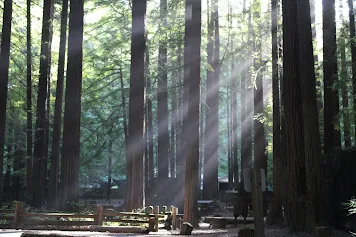
Soon afterwards, a turnoff pointed to Avenue of the Giants. What a spectacular sight to see massive Redwood trees, which are said to be the tallest in the world. These trees can get up to 2,000 years old. Virtually all the trees in the park were between 400 and 600 years old, which is pretty old for a tree.

Red Crescent had no grocery store, and I was pointed down the hill to the previous campsite. I sped downhill only to find there was no shop, then made my way back up the hill to the next camp. Luckily, I had enough food to see me through. I was eager to try the new tent, which was surprisingly easy to pitch and it felt like moving into a new house. Slightly bigger and heavier than the lightweight one-person hiking tent I used to have, it turned out to be a perfect tent by Columbia, which lasted for many years afterwards.


11 June - Humboldt Redwood State Park

Humboldt Redwood State Park was so unique that it called for a day of hiking. After cycling the four miles to the shop to stock up, I returned to my spot in the woods. The camp was surprisingly quiet for such a beautiful location, and I was the sole camper. Later, more cyclists and Kat (the lady with the dogs) arrived. Our conversation went on late into the night, as she was a fascinating yoga teacher who had previously lived in India.


12 June - Humboldt Redwoods SP – Standish-Hickey SP - 80 km

The following morning, in the next village, a family cycling through the region recommended Standish-Hickey SP. I was warned about a substantial hill ahead and advised to tackle it with fresh legs. I thought this was sound advice and cycled to the campsite, where I was the single camper.


13 June - Standish-Hickey SP – Mendocino - 88 km

The following day, my route ran past the drive-thru tree, and I snapped more pictures. Afterwards, I continued over the mountain, which mercifully wasn’t as severe as predicted. However, the road soon spat me out at the coast, where a hilly ride took me via Fort Brag and to the next Hike & Bike.


14 June - Mendocino - Manchester Beach KOA - 66 km

The day was a short but came with an immensely hilly ride and, as using the internet was a priority, I pulled into KOA Manchester Beach, thinking such a large and well-known campsite would have Wi-Fi and laundry facilities. Unfortunately, the Wi-Fi was a disappointment and only free for an hour. Moreover, the Wi-Fi was practically useless as I could not get a connection. The laundry, nevertheless, proved useful, and I tossed a few things into the machine.


15 June - Manchester Beach KOA - Bodega Bay Dunes State Park - 120 km

The Californian coast was slightly undulating but beautiful, calling for numerous photo stops. The good weather made cycling a pleasure, so I proceeded to Bodega Bay.


16 June - Bodega Bay – San Rafael - 134 km

My path veered inland to Bodega City, a place filled with intriguing sights and curiosities. The city and bay had a long history. As elsewhere, the Miwoks were the original landowners and the Spanish first surveyed the area in 1775. The Russians claimed the spot for king and country in the 1800s. Their legacy remains in names like the Russian River State Marine Recreational Management Area and the Russian River State Marine Conservation Area, two marine-protected areas in the Russian River.

The town was also a key filming location The Birds, and the old schoolhouse was still used. Roadworks and detours made for a long day on the bicycle.

Eventually, I arrived in San Rafael. With no camping options available, a motel room became home for the night. San Rafael was awfully close to San Francisco, but it was already late, and I had done enough cycling for one day.


17 June - San Rafael – San Francisco - 35 km

A short cycle led over the iconic Golden Gate Bridge and into San Francisco. Shortly past the bridge, I met a cyclist who accompanied me in finding a hostel. Unfortunately, the first one we enquired at was full. So, we continued past the waterfront to the next one, but only after stopping for coffee and a bagel. The Adelaide Hostel turned out lovely (a tad pricy but so were all hostels in SF). It came with a complimentary breakfast and a highly central location.

I used the internet to catch up on online work but discovered I had lost my daily journal.

I further discovered my phone’s SIM card slot was faulty; no wonder my phone never had an internet connection. The Garmin map bought in Seattle never loaded on my device, so I emailed them to inquire about what to do. As if that wasn’t enough, my camera lens got stuck (after dropping the camera). Although still functioning, it lost the auto-focus. At the camera store, I bought a new lens. It wasn’t high quality, but it had an 18-200mm lens, replacing the two I had previously carried.


18 June - San Francisco

I visited the computer shop to see if they could retrieve the lost journal file. The weather in San Francisco was glorious, and it was a good day to take the streetcar to the waterfront. Besides wondering about and blending in, I obtained information regarding a train to Seattle. The news was good, as a train departs San Francisco daily at around 22h00 for the return trip to Seattle.

I still had to put the bicycle in a box, which was available at the station for $15 plus a $10 handling fee. I further understood all I had to do was go to the AM track office, where the bike and bags would be loaded onto the train. Though the train was from Emeryville, the ticket included a bus ride from the Amtrak office to the train station.

The plan was to return to Seattle and cycle from there, either across Canada or east across the US. In the meantime, my new passport was eventually ready, and my sister forwarded it to the hostel in Seattle. Happy days!


19 June - San Francisco

With no phone call or email from the computer shop, I took a stroll to inquire about what was going on. Regrettably, they couldn’t recover the lost file, and a big blank remained in the journal.

Garmin never returned the email, and I sent them an additional message; it didn’t make any difference as they never answered emails—such poor service.

I was eager to get going but could hardly leave without the laptop. I further needed to apply for a Canadian visa, which seemed more trouble than it was worth. The online application was lengthy, and I lost interest even before registering. What a mission!


20 June - San Francisco

All these tedious tasks were getting to me, so I joined a walking tour of San Francisco. Afterwards, a visit to the computer shop revealed that they were still busy, and they advised me to check the following day. However, as the next day was a Saturday, they only opened at 12h00, which meant I had to spend one more day in San Francisco.

I made a serious effort at the hostel to complete Canada’s lengthy and complicated online visa application. My word—it was like applying for the presidency! Canada wanted all your family information, both dead and alive and, so, it was late at night by the time everything was finally done.


21 June - San Francisco

After breakfast, I collected my laptop, and once at the hostel, I completed the visa information. Still, there was no word about what form the visa would take and how it should be collected, and I guessed some form of proof would be emailed. The website gave the estimated processing times for the various offices but not an online application.

Eventually, everything was completed and submitted and even if no processing time was mentioned, I imagined it would be a long wait, in the region of three weeks or more.


22 June - San Francisco

I made my way to the Amtrak station. The bike boxes sold were quite large and the bicycle easily fitted once the pedals were removed and the handlebars turned sideways. The remainder of my stuff went into one large bag (bought in Chinatown). Unfortunately, the train wasn’t due until evening, and I had a whole day to kill.

The best part of the day was spent trying to rewrite my lost journal—a laborious task. By evening, a short stroll took me downtown to the Amtrak office, where buses ran to Emeryville.

The train was a strange setup – I had never seen a double-storey train before. It was extremely comfortable and provided plenty of legroom. It turned out well, as my seat was next to a rather large person. I then realised how challenging it must be to carry such a size around—everything becomes twice the effort. One constantly needed to feed the body to maintain such a size. All this effort must leave them utterly exhausted by the end of the day.


23 June – San Fransisco – Seattle – By train

For the most part, my time on the train was spent trying to rewrite the journal, which was challenging considering my goldfish memory. With the help of my photos and Google Maps, I reconstructed the past month’s events. It wasn’t perfect and made reading uninteresting, but I again lost interest long before the job was done. Fortunately, there was nothing to do, and I couldn’t go anywhere, so I was forced to finish the job.

The train ride was picturesque, and it was quite a novelty sitting back and watch the landscape pass by without pedalling a single stroke.

The train arrived in Seattle late, but thankfully, the hostel was across the road from the train station. Once the bike was reassembled, I packed my belongings and cycled to the hostel.


24-25 June - Seattle

First thing in the morning, a short walk took me to the Canadian Consulate, where I discovered they had no visa information and were unsure how to collect it once it was granted. This lack of information left me no option but to resume my quest east across the US’s northern states until Canadian access was granted.

The weather was glorious, perfect for a walking tour, sampling their world-famous clam chowder while feeding seagulls, and watching the sunset.

Friday, 23 May 2014

062 CYCLE TOURING SOUTH KOREA

Kimchi, Hot Springs and Cycle Paths      


SOUTH KOREA

 628 Kilometres – 13 Days

 5 May – 21 May 2014


PHOTOS

FLIPBOOK


Prelude

South Korea was never part of a grand plan—mostly because I rarely had one. It appeared on my horizon the way unexpected destinations often do: through a combination of visa trouble, bureaucratic shrugging, and the irresistible lure of a cycle path that promised to run the length of the country. I arrived with a round‑the‑world bicycle, a nearly full passport, and the vague hope that things would sort themselves out. What followed was a journey of temples tucked between skyscrapers, steaming bowls of kimchi, river paths that felt like secret corridors, and the occasional encounter with public nudity I was wholly unprepared for. In short, it was exactly the kind of adventure that happens when you don’t plan one.


Hong Kong to Seoul: The Great Escape

Hong Kong had become my accidental long‑term residence—partly because I couldn’t renew my Chinese visa, and partly because my South African passport was apparently so exotic that no one knew what to do with it. After more than a month of bureaucratic limbo, I finally escaped via taxi to the airport, clutching my worldly possessions and bracing for the inevitable overweight baggage fee.

The fee arrived, naturally, with all the subtlety of a slap. I paid it, because arguing with airport staff is like arguing with gravity.

Three hours later, the plane dropped me in Seoul, where I discovered I couldn’t draw money but could pay by card.” Priority one: contact the bank. Priority two: hope for a miracle.

By evening, I was still broke but optimistic—mostly because optimism was free.


Seoul: Rip Van Winkel Visits the Future

Seoul, until then, had been nothing more than a dot on a map—one of those far‑off places you assume is full of neon signs and people who know how to use technology properly.

It turned out to be the most technologically advanced city I’d ever visited, and I’ve been to places with automatic potato peelers. Everything beeped, blinked, scanned, swiped, or glowed. I felt like Rip Van Winkel waking up in a world where cash was a myth, and everyone else had already downloaded the future.

Yet, tucked between the skyscrapers were ancient temples and palaces, as if the city had politely agreed to keep its grandparents around. Some even came with actors sporting fake beards—because nothing says “authentic cultural heritage” like a moustache glued on with spirit gum.


Kimchi, Palaces & Pedestrian Mazes

The bicycle was reassembled at a local bike shop, and with my mobile home restored, I wandered off to explore. First stop: Bukchon Traditional Cultural Centre, where old Korea was preserved beautifully—minus the occasional tourist wearing a hanbok backwards.

Later, I visited Deoksugung Palace, a lovely collection of old buildings that looked as though they’d been dropped into the city by a time-travelling architect.

My amble continued through Namdaemun Market, famous for its street food and its ability to lure you into buying things you don’t need. I picked up my daily ration of kimchi—because in Korea, kimchi isn’t a side dish; it’s a lifestyle. Fermented vegetables appeared at every meal, sometimes even starring as the meal. I was hooked.

If fermentation was a religion, Korea was its Vatican.


The Accidental Discovery

I meant to leave Seoul. Truly. But the city kept revealing more treasures, like a magician pulling rabbits out of a hat.

While buying camping gas, I stumbled upon a cycle path along the river—rumoured to run all the way to Busan. I was sceptical, because rumours in the cycling world often involve phrases like “mostly flat” and “just a small hill,” both of which are lies. Still, the idea of cycling across the country was irresistible.

Seoul continued to charm me with funky cafés, narrow pedestrian lanes, and architecture that looked like it had been designed by enthusiastic origami artists.

I wandered along Cheonggyecheon, an 11‑kilometre stream rediscovered after someone had the brilliant idea to demolish a highway. Now it was a peaceful oasis of greenery, art, bridges, and waterfalls—proof that occasionally, urban planning gets it right.


The Joy Ride to Yangpyeong (91 km)

At nine o’clock, I pedalled out of Seoul grinning like someone who had just discovered a secret passageway. There’s nothing quite like cycling into the unknown with no idea where you’ll end up.

The Han River cycle path was wide, smooth, and filled with cyclists dressed as though they were competing in the Tour de France—on a public holiday. Twice I fell into conversation with fellow riders, who generously shared tips and information.

The route followed an old rail line, meaning it was blissfully flat and any hills were replaced by tunnels. I felt like I’d won the cycling lottery.

A wave of joy washed over me. This—this feeling of freedom—was exactly why I travelled.


Yangpyeong to Chungju: The Silkworm Incident (100 km)

It took all day to pedal the 100 kilometres to Chungju, but the path made it delightful. Along the way, I met a young cyclist heading to Busan with nothing but a tiny backpack and the stamina of a mountain goat. His English name was Ben, and he kindly waited for me on the hills, translating information boards that were otherwise decorative Korean wallpaper.

At one stop, I tried beondegi—steamed silkworm pupae. Koreans eat them as a snack. I ate one. Just one. It tasted like something that had died twice.

In Chungju, Ben continued onward while I found a room. I wished him well and hoped his backpack contained something more appetising than silkworms.


Suanbo Hot Springs: The Naked Truth (25 km)

Leaving Chungju, I met another cyclist who insisted on giving me energy bars—Korean generosity was unstoppable.

Soon I reached Suanbo, a small mountain town famous for its hot springs. While searching for accommodation, I heard someone call my name. It was Ben! Koreans may be efficient, but apparently, they’re also excellent at reappearing unexpectedly.

We had breakfast together, sitting on cushions at low tables, shoes off, knees politely folded. Ben paid (again) and escorted me to a Jjimjilbang, my first Korean sauna experience.

Inside, one must strip, shower, scrub, and then enter the pools—no bathing suits allowed. Public nudity is not my natural habitat, and I’m fairly sure the local ladies had never seen a foreign woman naked before. Their eyes followed me like I was a rare zoo exhibit.

I submerged myself immediately and stayed underwater until I felt brave enough to dash back to my clothes.

The sauna also offered napping rooms—simple mats on the floor and wooden pillows, which are exactly as comfortable as they sound. Cycle tourers often slept there for free. I wasn’t convinced I’d ever get used to a wooden pillow, but free is free.


Gumi Weir: The Round Bed & Rural Charm (103 km)

Rain hammered down all night, but by morning the sky had decided to behave. I pedalled off through tiny mountain hamlets where villagers were winnowing rice outside their homes—an activity that looks wonderfully poetic until you realise it involves throwing grains into the air and hoping they land somewhere useful.

Accommodation that night was one of my usual “rooms rented by the hour.” These establishments specialise in beds shaped like geometric experiments and lighting that suggests the previous occupant was a disco ball. My bed was round—because apparently squares are too mainstream—and came with a generous selection of personal care items, most of which I didn’t dare inspect too closely.


Dalseogyo Bridge: Freedom & The Goldfish Bowl (108 km)

Freedom means different things to different people. For some, it’s financial independence. For others, it’s the ability to eat ice cream for breakfast. For me, it’s pedalling off with no idea where I’ll sleep that night.

The road hugged the river, winding past rural communities, old temples, and farmland so green it looked Photoshopped. It was one of those days where everything felt right—until I pitched my tent on what I thought was a quiet grassy patch.

It turned out to be Millennium Plaza, which at night lit up like a Christmas tree on steroids. I spent the evening glowing under floodlights, feeling very much like a goldfish in a bowl—minus the castle and the tiny plastic diver.


Namji: Miss Smarty Pants & The Hills (90 km)

Camping in a public square means no sleeping in. By sunrise, I was boiling water for coffee and loading up. Feeling adventurous, I attempted an alternative route—Miss Smarty Pants’ brilliant idea.

Miss Smarty Pants was wrong. She had to backtrack.

The path soon turned hilly, the kind of hilly that requires pushing the bike while muttering motivational speeches under your breath. Breakfast had been forgotten, and my energy levels plummeted until a 7‑Eleven appeared like a fluorescent oasis. After inhaling lunch, I tackled the remaining hills with renewed enthusiasm.

Namji offered a room—perfect for charging my ever‑multiplying gadgets. I swear they breed in my panniers.


Namji → Busan: Flowers, Hills & Urban Chaos (111 km)

My final day to Busan was beautiful but not without a few “character‑building” hills. The route wound through rural villages and over mountains, with spring flowers blooming everywhere, as if nature had gone slightly overboard.

By late afternoon, the peaceful cycle path spat me out into Busan’s evening traffic—a shock to the system after days of tranquillity. I braved the chaos in search of budget accommodation, feeling half triumphant and half melancholic. Reaching a destination always does that: joy mixed with the faint sadness of an ending.

A tourist information office saved the day, pointing me toward a cheap motel hidden in a narrow lane that transformed at night into a bustling food market. I checked in, dodged a few sizzling pans, and collapsed.


The Visa Plot Twist

Busan had a ferry to Japan, so I marched off to the Japanese Consulate, only to discover they didn’t issue visas to foreigners. One must apply in one’s home country or have permanent residency—neither of which I possessed.

Changing plans isn't my favourite pastime, especially when bureaucracy forces it. I considered flying elsewhere, but packing the bike is a hassle, and airports are where joy goes to die.

My passport was nearly full, limiting my options to countries that didn’t require visas and allowed long stretches of cycling. The Americas made the most sense—I already had a U.S. visa and unfinished business there. Logically, I should return to San Francisco and pedal north.

But logic and I have a complicated relationship.


Temples, Decisions & The Big Box

I moved to Blue Backpackers, which had more facilities and, conveniently, a nearby bike shop. The plan was to get a box for the bicycle and decide my next destination at the last possible moment—my preferred method of planning.

By morning, I handed the bike in to be boxed. Several things needed repair, but I ignored them, figuring it was better to fix everything in whichever country I eventually landed in.

Busan’s metro system was extensive, so I ventured underground to visit Buddhist temples on the outskirts. They were serene, green‑toned (unlike China’s red temples), and guarded by the four Heavenly Kings—each responsible for a direction of the world and apparently very busy.

A friendly tour group gave me a lift back to the metro, and in the city centre, rows of food stalls appeared like magic. I ate my fill, returned to the hostel, and packed for the long flight to Seattle via Beijing. From Seattle, I planned to pedal south to San Francisco (where I left off a year earlier). Hopefully aided by prevailing winds.


Busan to Seattle: The Case of the Missing Backpack

We landed in Seattle in the early hours, and the city looked delightful—fresh, crisp, and full of promise. The amusing part was arriving in Seattle before leaving Beijing, thanks to time zones doing their usual tricks.

Leaving South Korea felt a bit like closing a book mid‑chapter—one moment I was cycling along rivers and sleeping under neon floodlights, and the next I was hurtling across the Pacific toward a city I’d technically arrived in before leaving Beijing. Seattle greeted me with crisp air, a missing backpack, and the familiar chaos of reassembling my life around a boxed bicycle. It wasn’t the destination I’d planned—mostly because I hadn’t planned one—but it was where the road was waiting. And as always, once the bike was freed from its cardboard coffin, the only sensible thing to do was point it in a direction and start pedalling again.


Epilogue

By the time I left Busan, my bicycle was boxed, my plans were still undecided. South Korea had given me round beds, hot springs, luminous plazas, and cycle paths that stitched the country together like a gentle thread. It had also reminded me—quite firmly—that travel is less about knowing where you’re going and more about being willing to go there anyway. As my plane lifted toward Seattle, I felt that familiar mix of sadness and anticipation. One chapter had closed, another was already unfolding, and the road—whichever continent it happened to be on—was waiting.

Tuesday, 6 May 2014

061 HONG KONG


Hong Kong & Macau

 28 March - 5 May 2014

(0km – 36 Days)


28 March - Hong Kong

At seven o'clock the following morning, the bus arrived at the border. After crossing into Hong Kong, I decided to continue by bike but was stopped by police a few kilometres later. They informed me that cycling wasn’t allowed on these roads, and the area had no bicycle-friendly roads leading to Hong Kong. A few minutes later, the same bus I had taken earlier came by and picked me up, which I thought amusing.

Once on Hong Kong Island, I decided to try cycling and asked the bus driver to drop me off. I was amazed by how busy and developed the area was. Skyscrapers and high-rise buildings surrounded me, and buses and trams crisscrossed the island. I felt small and insignificant as I navigated through this massive city.

Finding affordable accommodation in Hong Kong was my top priority. Still, my plans hit a snag when I realised that the World Rugby-7s event was taking place that weekend, making it nearly impossible to secure a place to stay.

After searching, I managed to find a room at Alisan Guesthouse, but it was only their "staff" room which had a small bed and limited space. Despite its shortcomings, it was one of the cheapest options in Hong Kong, so I took it and continued my search for a place to stay for the night as the room was only available from the following day.

The only hotel with rooms available was the Holiday Inn, which made me question its value for money. Nevertheless, I planned to meet with Carlos, a South African friend who lived in Hong Kong, later that evening. Carlos had a meeting on the island, but once he was done, we met for coffee and had a long chat, catching up on the years we had missed. 


29 March - Hong Kong

The main reason for visiting Hong Kong was to obtain a new Chinese visa, so first thing in the morning, I went in search of the China Visa application centre, only to be told the longest they could grant was a seven-day stay. However, a bigger problem was that my passport was almost full, with only two empty pages.

Since access to the room at Alisan was only at 13h00, I roamed the city’s busy streets and was amazed by the large number of rugby fans dressed in their team colours for the big game. Despite my passport crisis, I pretended everything was fine and headed to the port, where a ferry ride across the bay was only $2.80.

Once back on the island, I climbed an escalator that led to Mid-Level. From there, one could walk to the tram station, taking people to the viewpoint. However, I didn't want to wait in the long queue and continued on foot.

The plan was to wait until the following day to search for the South African Embassy to enquire about obtaining a new passport, and then locate the China Resource Centre and see if it was possible to secure a new visa.


31 March

My endeavours were fruitless as the embassy informed me that a new passport would take four months. Despite this, I filled out the necessary forms, took pictures, and paid the fee. However, I had no intention of waiting for four months!

At the China Visa Office, the line was incredibly long. When it was my turn, the staff informed me that the maximum stay was 15 days and that one needed to provide proof of accommodation and transportation. I was frustrated and tempted to say, “Fuck that”, but instead, I gathered my things and took a coffee break. Later, I realised that I’d left my recently purchased umbrella behind. At that point, nothing surprised me anymore and best to expect the worst.

At least when the city got too much, there was always a temple nearby, including a few interesting ones. Dwarfed by the high-rises, these tiny temples offered peace and calm in contrast to the hectic city life. Giant incense coils hung from ceilings, from which smoke slowly rose. It's believed some of them can burn as long as three weeks.

To put matters in perspective, without a Chinese visa, I was virtually stuck in Hong Kong, from where it would require flying out. More urgent was a new passport, as most countries needed at least two empty pages.


1-3 April - Hong Kong

I revisited the South African embassy, to learn the procedure for my sister to collect my passport in South Africa, and courier it to me, as waiting four months wasn't an option. I then went to the Giant bicycle store to check if they could box the bike as I would be flying out of Hong Kong regardless of my destination. The only positive thing that day was that the umbrella was still at the coffee shop. When I picked up my laundry, I didn't check it as it wouldn't be surprising to find a few items missing. The rest of the day was spent trying to load a Garmin map of South Korea and Japan but to no avail. The only official Garmin map was their "world map," which one couldn't download but had to purchase on a disk or memory card that would be sent to you. Frustrated, I went to a pub, but they didn't have Wi-Fi, which was disappointing. Everything seemed to end in disaster, but I knew this unlucky and disastrous stage would pass.

It had been raining since my arrival in Hong Kong, and the weather wasn't perfect for sightseeing. Still, I considered staying in Hong Kong until the end of the month to give the planets time to align themselves. As I was still unsure about getting the passport, waiting until the end of the month sounded like a good idea, and it would significantly reduce the room rate in this expensive city. I also needed personal maintenance, such as dental work and reading glasses. A facial and pedicure wouldn't hurt either.

The next night, I spent time with Carlos and his wife Melody at a popular drinking spot in the famous Lan Kwai Fong Street. It was a lot of fun, and I didn't get back until the early hours of the morning.


4 April

Hong Kong is a hectic and competitive city. It’s said up to 2.8 million of the residents suffer from insomnia, a symptom of its hectic lifestyle, as the most common problem is work stress.

I joined the crowds and pushed and shoved my way along the narrow lanes, and when it got too much, I walked up the mountain to “The Peak”. The walk was pleasant, but as it was misty, there was no view, and I bused myself back to the city's hustle and bustle.

Back on level ground, I headed to the ferry pier and took the Star Ferry across the harbour to Kowloon to visit the night market and a few temples. On the return trip, I snapped a few pics of this famous city skyline.


5 April

April 5 was a public holiday called “Tomb-Sweeping Day” (Ching Ming or Qingming Festival). It’s believed that temperatures would rise from this date on, and rainfall would increase, indicating the time to start ploughing and sowing. The day was also for paying respect to the dead by cleaning the tombs and by offering flowers and food, two essential parts of the celebration. With cremation taking over from burying, most only offered flowers and food.

It appeared the younger generation paid their respects by shopping as the streets were jampacked. One could barely move due to the crowds. I headed to the dried food market where one should, at least theoretically, be able to cure all ailments. I don’t know what dried gecko is used for, but if you need it, you can find it in Hong Kong.


6 April

With time, I jumped on the MRT to visit the outlying areas and the Ten Thousand Buddhas Monastery. Due to the constant rain, the temple wasn’t as impressive as expected. What was far more amazing was the fact the Qingming festival was still in full swing.

The monastery was packed with people lighting candles and incense and placing flowers and food for their deceased relatives. I got caught up in the whole ritual. It wasn’t a morbid or serious affair; people were laughing, chatting and having a good time. I further noticed it wasn’t only the deceased’s favourite food that was provided but also, in some cases, a few beers.

On my return to the MRT, I spotted a trail and walked along the path without knowing where it would lead. It turned out to be a stunning walk up the mountain - lush and green without any sign of the city. I continued until the path ended at a Christian Institute with beautiful old buildings.

Keen to visit Po Lin Monastery, I made my way to Lantau. Once there, the bucketing rain, made for leaving the cable car ride for another day.


7 April

I visited the New Territories the following day and encountered a strange “tree-house”. Some say the Kam Tin Tree House was originally a study hall with a banyan tree beside it. Others say it was a temple, but what was sure was that, since the abandonment of the building, the banyan tree grew bigger and bigger and eventually wholly enveloped it.

Later, I was surprised to find an old walled village on this overpopulated island. The way of life in this walled village appeared to have remained very traditional. About 400 people live in Kat Hing Wai, and I understood that most still share the same surname.

In Hong Kong, horse racing appeared the main recreational passion among all levels of society. There seemed to be off-course betting branches on every corner. In the 1990s, all stables were moved to Sha Tin Racecourse, equipped with the world’s first parade ring, covered by a retractable roof and a Diamond Vision television screen that set a Guinness World Record. Hong Kong was said to have the highest racing revenue turnover in the world. Seeing the crowds studying racing papers, I could believe it.


8 April

Carlos introduced me to the local hiking group, and I went on the first of many hikes with them. At first, the weather was good, but once at the top, it started raining, and it continued raining on the return trip. Besides being wet, the walk was lovely. It's incredible to think it only takes 20 minutes to leave this megacity and find yourself in a lush and rural setting. Afterwards, Carlos and I went for a much-needed coffee, dripping water all over the coffee shop.

As the days passed, I became increasingly fond of Hong Kong. The city ran like a well-oiled machine, 24 hours a day. I loved the sounds of the town; the buses, the trams, the cars, the subways, the chatter at the sidewalk eateries, the distant music, the police sirens and car alarms. This constant humming made me feel at home and secure. The sounds relaxed me, and I drifted off to sleep, knowing the world was alive and well, without me caring for it.


9 April

As mentioned before, I stayed in Hong Kong to do a few things I’d neglected during the years. I, however, had so much fun I never got around to those tedious tasks. Finally, a hair appointment was made, and the day was spent at the hairdresser. I got the recommendation from Melody, and, interestingly enough, the salon's owner was a South African lady. With the hair done and dusted, I could at least tick one thing off the to-do list. Most people enjoy having their hair done, but I didn’t like anyone fiddling with it and was usually irritated when I got out of there.


10 April

The weather finally cleared, and good use of it was made by taking the bus to the top of Victoria Peak to see if one could get any pictures of the city. As always, it was a stunning bus ride, and the view from the top was equally impressive. Half of Hong Kong and all its visitors had the same idea.


11 April

I was off on my second hike early in the morning with the hiking group. Again, a beautiful walk along what was known as the Dragons’ back. We ended up at a scenic beach for lunch. That evening, I met with Mat (whom I met on the Tour d’Afrique ride) for a drink; it was good to see him, and I couldn’t believe he still looked the same after ten years. It seemed I was the only one ageing at a rapid rate.


12 April

The next day, I met Carlos and his daughter Natalie at Lantau Island, where we took the famous Ngong Ping cable car to see the Buddha. This 5.7-kilometre-long cable car stretched up the side of the mountain to the Po Tin Monastery. With views over Lantau Island and beyond, the ride is spectacular. It took climbing 268 steps to the 34-metre-high bronze Buddha which sat on a lotus leaf keeping a watchful eye over the island.

After visiting the Buddha, we bussed ourselves down the mountain, an equally spectacular ride. The small fishing village of Tai O, famous for its shrimp paste and its stilted houses made an interesting stop. A narrow footpath ran through the village, passing dried fish products, and I sadly spotted dried seahorse. With rumbling tummies, we made our way to a restaurant, and low and behold, would it not be South African, known as “The Stoep”. The location was fantastic - right on the beach, and the food was equally good. They served all the old favourites: bobotie, tomato bredie, and they even had a “braai”.


13 April

One of my highlights was joining Carlos and Melody on a family outing. We caught the ferry to Lamma Island, where a walking trail took us to a small fishing village for lunch. The walk led past stunning scenery and an old Kamikaze Cave, which, I believe, was constructed by the Japanese to house a flotilla of suicide motorboats.

Melody ordered (and paid for everything), and massive plates of food promptly arrived. The food (as usual) was delicious; although we did our best, we couldn’t finish it. After lunch, a ferry and bus ride took us to Stanley Market, where one could trundle around for hours. While having coffee, Melody returned with beautiful sandalwood fans for Natalie and me. I was spoiled rotten. As we strolled the market's narrow lanes, I as a gift admired a top but decided to give it a miss. On my return, I found Natalie had bought it for me. How generous of her. Too soon, the sun started setting, and it was time to return home.


14 April

I did nothing all day except sorting out photos and updating my diary. Afterwards, a tram ride took me to Kennedy Town, and I later returned for a foot massage. I had the whole treatment (including the tea - as it’s said to boost circulation and free the flow of the qi).


15 April

A tram took me downtown and to the local chop shop street. Instead of a signature, traditionally, people used hand-carved seals or stamps, typically in stone or jade, with their family name written in Chinese. These stamps were known as “chops”, and many say that, in a company, whoever holds the chop holds control.

Chop Alley was a little street lined with shops where you could get your personalised chop made at a very reasonable price. All shops had a beautiful array of choices and styles – round, square, irregular, and various sizes and colours.

The dried fish street was equally fascinating. To an outsider, the ingredients seemed an overwhelming random jumble. But I was told they were all carefully selected for their contributions to yin and yang, chosen to create balance in the body by traditional Chinese medicine. For instance, dried seahorses were used to remedy kidney and respiratory ailments and were said to help balance and clear up skin.


16 April - Macau

The following day was fun and exciting as I joined Melody, Carlos and Natalie for a daytrip to Macau. The ferry to Macau only took an hour, and what a fascinating little country. Macau was tiny and only measured 115 square kilometres. Being a former Portuguese colony, it was very different from Hong Kong. Firstly, the two official languages were Cantonese and Portuguese, and although Macau was equally populated, it seemed to have more low-rise areas. Well-known for its gambling halls, Vegas is the only place that eclipses Macau in gambling income. The big difference is that, beyond the gambling halls, one could find cobblestoned streets with a curious mix of Chinese temples and Portuguese buildings. The ruins of the Church of St. Paul, where only the façade remains, draw crowds of tourists, and it took a walk up the hill to get any half-decent picture.

Later, we dined at a Portuguese restaurant, after which we strolled around the massive casinos and stared in awe at the money spent.


17 April

A fun day was spent on a walkabout with the local photography group. The theme was visual density and great fun. I, once again, realised just how talented these people were - wow. Once done, we met for a beer, and by the time I went home, I was just in time to watch the light show at the waterfront. It was a beautiful, clear evening, and it was magical to be out watching the show.


18 April

Hong Kong was an extremely liveable city, and everything was convenient. I have to mention the Octopus card, which didn’t only get you on a bus, tram or ferry, but it could pay for your supermarket shopping, parking, fast food, sandwich and coffee shops, and a round of drinks in a pub. You just swiped and go. I loved it.

Up earlier than usual, I headed to Hong Kong’s New Territories. The further away from the city centre, the quieter the metro became. The plan was to locate the seldom-visited Ping Shan Heritage Trail. The walk was short but interesting; my favourite part was the moon gate at Chin Shu.

Miss Smarty-Pants took the camera but had no memory card. Oh well, at least it allowed me to experiment with the phone camera. Afterwards, I stopped off at the Wetlands Park, but being a holiday, the park was packed with families enjoying their day off. Someone said about 60% of the land in Hong Kong was countryside; with the land supply so tight and the need for accommodation so high, I wondered how long the country parks would remain.


19 April

I joined a lovely group on a short night hike that day. It took no more than 10 minutes, and we were out of the city and into the woods. Being a clear evening with great views, we chatted nonstop as we ambled along. Afterwards, the group again stopped at Slims for beer and snacks. What a great evening, and what a friendly group of people. Hong Kong is very cosmopolitan, and more than half the hikers were people from other countries residing in Hong Kong.


20 April

It felt like I had truckloads of karmic debt. The Universe had blessed me with so much love and random acts of kindness I didn’t think I could ever repay it. Today, I discovered someone had paid my Ace membership on the 365-project. How awesome was that?


21 April

My visit to the New Territories was to visit Carlos and Melody, and I was again impressed with the convenience of amenities in Hong Kong. Their complex was just as convenient, with everything one needed close by, from parks to shopping centres, movie houses and restaurants.


22 April

An online company was located which could arrange South African passports in as short as 15 days (instead of the embassy’s four months). After completing the forms, I decided against it due to the hefty price tag. The price, I should mention, included a courier service which collected and delivered the documents and passport.

The time arrived for the dreaded dentist appointment, which was never pleasant, but it had to be done. A follow-up appointment was made for the third, which was later than expected. I was getting itchy feet and was keen to get going.


23 April

A rainy morning made the perfect time to update travel logs and have a pedicure (long overdue, I should mention).

The best thing about Hong Kong was that it was probably one of the safest places in the world. There is no need for a “reclaim the night” movement here. I like that one could walk home late at night without worrying about personal safety.

Another reason I like Hong Kong is how cosmopolitan it is. Ethnic Chinese comprised the bulk of its population, but there is a sizeable presence of expatriates and people of different ethnicities. Many Indians could trace their roots in Hong Kong to when India was under British rule. Sikh soldiers participated in the flag-raising ceremony in 1841 when Hong Kong was declared British. It’s believed the earliest police officers in Hong Kong were Indians (Sikhs), and during my stay, the police force still had a few Indian members.


24 April

My early start was due to meeting hikers on Lantau Island for yet another hike. This time, the group followed the Olympic trail, which headed over the mountain to Discovery Bay, where lunch was had. With it being foggy, there was no view, but it was still an enjoyable walk past small rural settlements, something I didn’t expect in such a congested country.


25 April

The old streets of Hong Kong were lined with Chinese medicine shops that sold all sorts of exotic products, from herbal medicines to dried snake meat. In between the suppliers of the dried goods were TCM practitioners, some with a pot or two of prescribed herbs simmering in earthenware pots. I guessed they were good; otherwise, they wouldn’t still be around.


26 April

Walking the “Avenue of Stars”, I only recognised one person, the famous Bruce Lee. That evening, the hiking group again went on a short night hike. Carlos joined the walk, and we ended up at Slims for a beer and a shared plate of nachos.


27 April

I was sure getting my share of hiking as I set off on another hike. This time, we ended up at Stanley on the other side of the island. Some hikers left after the walk, but most stayed for lunch. Afterwards, a few beers were bought from the 7-Eleven, and we sat on the beach enjoying it.


28 April

First thing in the morning, I searched for a post office and mailed a letter to Amanda, permitting her to pick up the passport on my behalf. Gosh, I haven’t posted anything in years. It suddenly felt so old-fashioned. The stamps were, however, beautiful. After that little task was done, I continued to Kowloon and handed in my camera to be cleaned.


29 April

Just after midday, I joined Carlos for a walk along the old Lung Yeuk Tau Heritage Trail. It was a fascinating walk through 5 of the ancient walled villages. Most of these villages are enclosed by brick walls and fitted with an entrance typically facing east to generate a good feng shui. We met another traveller and joined forces for the rest of the walk. We ended up in Kowloon, where Carlos treated us to coffee.


30 April

For once, I had nothing planned and visited the hairdresser for hair treatment. As usual, it took forever; at least they offered you a glass of wine while waiting. Afterwards, I searched for a new nose ring, as I’d been wearing the same one for decades.


1 May

I caught wind of another photography walk, and being May Day (or Worker’s Day), the theme was “People at work”. With a beautiful bunch of people, we explored the markets and streets and, like the previous time, met for beer and to share photos.


2 May

As almost no one in Hong Kong had a garden the city’s urban parks were very well used and clever landscaping meant it never felt crowded. I was getting itchy feet and couldn’t wait for the 5th to move on. There was only one more dental appointment on the 3rd, and it couldn’t come soon enough.

With only two blank pages left in my passport, it would require jumping through some hoops to avoid countries requiring visas, or at least until the new passport arrived. Therefore, I opted for South Korea.


3 May

Finally, the third arrived, and I cycled the short distance to the bike shop to have the bike boxed, after which I visited the dentist and only emerged a few hours later. After all was done and in the company of Carlos and Melody, we had one last meal before my departure.


4 May - Hong Kong

I booked a dive and was up early to get the MTR to the pier because I had a day free. Our dive boat was impressive and resembled a liveaboard, with cabins, a lounge, a kitchen and a deck area - all very fancy. The dive, however, was a bit of a disappointment as the visibility was poor, and one could hardly see anything at all—at least the food made up for the poor dive as it was excellent. I didn’t even bother doing a second dive, which should tell you something about the poor quality of the water.


5 May - Hong Kong – Seoul, South Korea - By plane

With my meagre belongings packed, I hailed a taxi to the airport. The baggage fee came as a shock, but there wasn’t anything one could do but pay and get it over and done with. The flight arrived in Seoul three hours later (but the time difference made it four hours). It was discovered I couldn’t draw money but could at least pay with the card—what a pain. I contacted the bank and hoped it would all be sorted out by morning. At least I was on the move again.